Crate training your dog helps it feel secure and safe at home. Crate training seems a little intimidating if you’ve never used a crate before, but if done properly, it will be a positive experience for your dog. This guide will offer knowledge about the purpose of crate training your dog and how to get started with your puppy, as well as tips on developing a routine that benefits both you and your dog.
Understanding the Purpose of Crate Training Your Dog
Crate training your dog serves as a private area where the dog can feel calm and sleep comfortably. When introduced correctly, the crate acts as a den for the dog because dogs instinctively want to find sheltered places to sleep and an appropriate location to get away from noise or activities.
Why Dogs Respond Well to a Crate
A properly introduced crate training your dog provides a safe, quiet place for your dog to go when it is tired or needs a break from its environment. Dogs will often use their crates as a retreat when they are in training, and they will associate the crate with safe or positive things.
Crates provide a safe place for your dog to go, it will feel relaxed and calm over time. As you develop a regular crate training schedule along with providing your dog with pet grooming services to enhance well-being, your dog will make itself more comfortable and relaxed in the crate.
Choosing the Right Crate for Your Dog
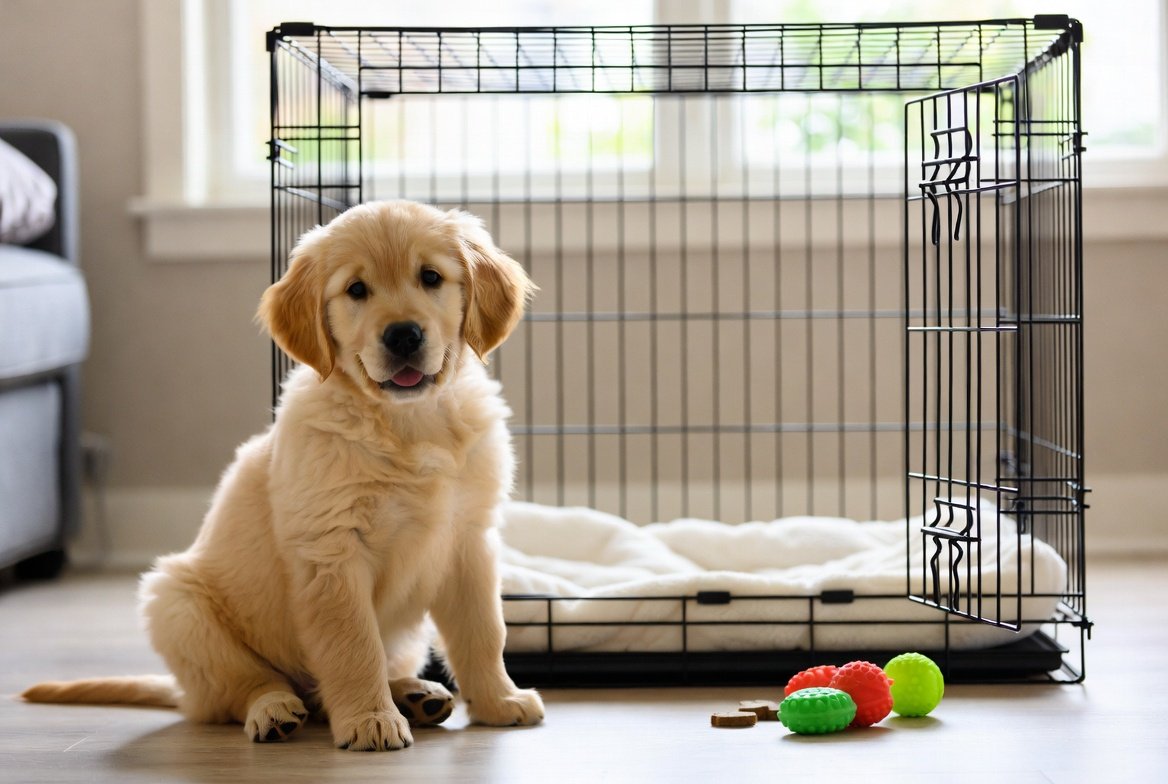
The best way to start crate training your dog is to first find the right size, style, and location for the crate you want to purchase for your dog. The main concern with choosing a crate is to find one that will give your dog plenty of room to stand up and turn around, but not be so big that it creates too much anxiety and a lack of comfort and or security for your dog.
With focus and consideration, you can easily determine the right size crate for your dog. A crate should be big enough for your dog to comfortably lie down in and still be able to turn around in the crate.
- Material of Crate: The type of material used in making a crate impacts how secure you feel when using a crate, as well as how comfortable your dog will be in the crate. Crates are available in different types of materials like metal, plastic, and fabric, and provide different benefits.
- Location of Crate: When deciding where in your home to place your dog’s crate, you want to be sure to choose a location that is away from noise, but still close enough to be a part of your family. Selecting a location that provides a quiet but comfortable space for your dog provides the opportunity to rest comfortably. It also helps with recovering from pet surgery, if your dog has one.
Creating a Welcoming Environment to Introduce Crate in a Positive Way
To help create curiosity, you can put soft or comfortable bedding and familiar-smelling items inside the crate. An open door will allow your dog to explore the crate of his desires. You can also place treats or toys inside the crate to form positive experiences with it.
By doing this, your dog will choose to enter the crate on its own rather than having to be placed inside. It will ease the process of crate training your dog. Establishing and maintaining good habits regarding the cleanliness and healthiness of your dog’s crate can also help create a calm and relaxed crate training your dog session.
Building a Consistent Routine
In the development of crate training your dog successfully, it is important that you establish a consistent routine. It will help familiarize your dog with its crate and adjust accordingly. Begin by encouraging your dog to get into their crate for very short periods throughout the day and gradually increase the amount of time they stay inside the crate.
Establishing a resting, feeding, and sleeping time each day will help your dog accept the crate as part of its daily life. It will create confidence in your dog and will reduce the amount of confusion from using the crate on a regular basis.
Managing Whining and Resistance
Whining and resistance are common in the early process of crate training your dog. Don’t respond to whining with immediate attention. Allow the dog time to settle down and be quiet before giving any kind of physical or verbal acknowledgement. You may want to provide gentle reassurances along with your encouragement to create independent behaviour. However, the majority of crate training your dog will be based on having the dog develop an understanding that its crate is a safe and secure area rather than an area that causes them undue suffering. The dogs staying in the crate due to recovering after a surgical procedure may require extra patience and care.
Using the Crate for House Training
Crate training your dog is often used in conjunction with housebreaking because it helps control a dog’s normal instincts. Dogs generally relieve themselves in their sleeping place. By putting the dog in the crate periodically, the owner can help the dog build up better control of its bowels and bladder. A consistent routine of feeding and cleaning helps enhance this process.
Avoiding Common Mistakes
When you use crate training to punish your dog and place them in it as a punishment, it can create fear and resistance to using the crate in the future. When you leave your dog in the crate for a long period of time, it may lead to anxiety or frustration. You need to create a balance between the time your dog spends in the crate, the time they spend playing, exercising (walking), and the time they spend socializing with other dogs or people.
It is important to understand that the crate is a positive living place and not a place of punishment for your dog. Your overall wellness practices will help keep your dog in a physically and emotionally stable place while they are being crate trained.
Gradually Increasing Independence
The crate may be used in a less formal manner as dogs gain confidence and become more relaxed. Once dogs learn through continual training to go into their crates for rest, they see them as safe, trusting environments and enter their crates voluntarily. Then owners can use crates when traveling or when leaving their pets at home alone. You can place them in crates when you decide to keep your dogs in a pet boarding facility for a short duration of time.
When to Transition Away from the Crate
If your dog consistently behaves appropriately when left alone, in the company of others, and follows the rules of the home, it may be time for your dog to have additional freedom. It eliminates the need to place them in crates.
Transitioning should provide the dog with time to adjust, but not take away the sense of security provided by having a crate. Some dogs will still want to use the crate as their rest area even if it is no longer needed. So, allow them to adapt to new settings and leave the crate behind.
Conclusion
Crate training your dog is necessary yet essential for your dog’s well-being. It helps adjust the new dogs to your home environment as it resembles their den. It also provides the basis of safety and security for them to feel at home. Crate training your dog also benefits the dog owners themselves by making it easy and comfortable to carry their pets along while travelling. Healthy pet nutrition plays a part in keeping your pet healthy, safe, and sound while Crate training your dog.
Moreover, you can read related blogs on the web page of Park Hills Animal Hospital.