Different diseases affect cats’ well-being, one of which is heartworm disease in cats. Although this disease is associated with dogs, it can occur in cats. Cat owners need to learn about heartworm disease in cats in order to provide proper care to their felines and reduce the risk of disease progression. Learning about the development and symptoms of heartworm disease will allow the pet parents to take preventive actions and provide their pet with the necessary care in case they develop the disease.
What is Heartworm Disease in Cats
Heartworm disease in cats can have a negative effect on the physical and psychological condition of pets and may be responsible for their decreased lifespan. However, the process of diagnosing it in cats is not simple. The main reason for this lies in the fact that felines often develop mild symptoms of heartworm disease or do not demonstrate any symptoms at all in the early stages. This means that the parasite can severely affect the cat’s body before you become aware of the problem. Therefore, learning about how the heartworm disease in cats develops will enable you to prevent or stop the development of the disease.
How the Infection Develops in Cats
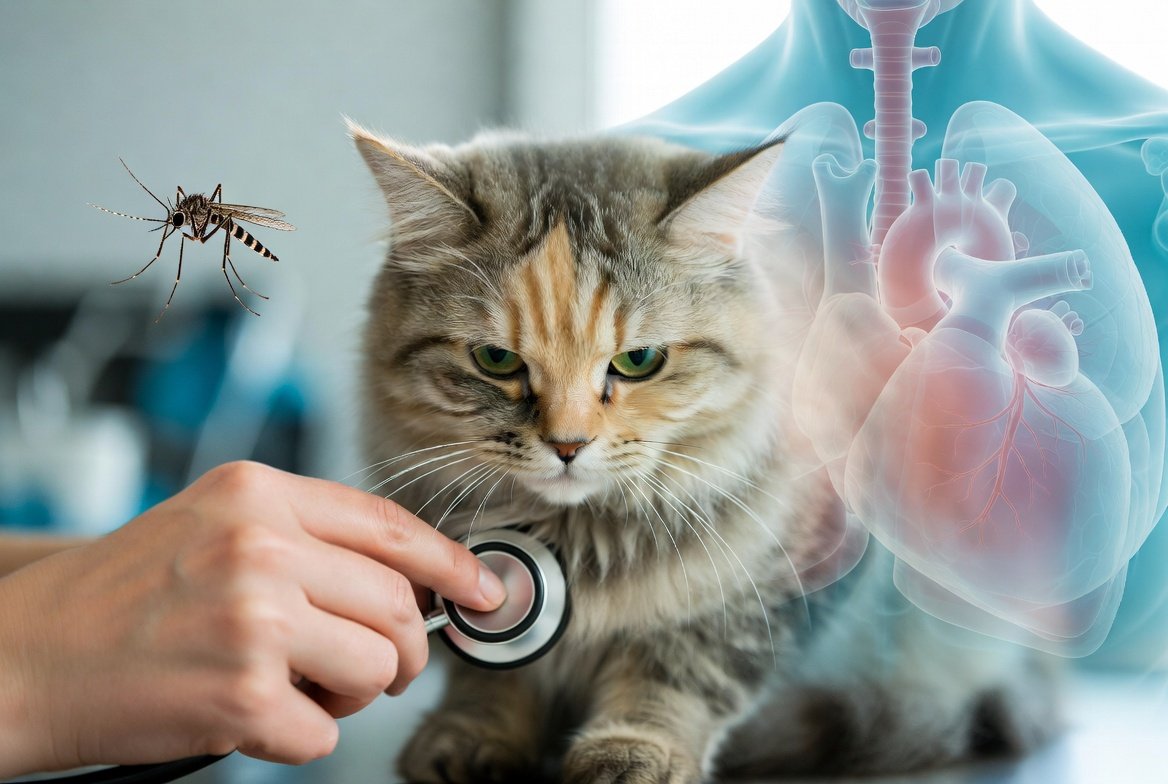
The main point in the development process of heartworm disease in cats is that the disease starts developing from the moment the cat gets infected with the parasite through a bite made by an infected mosquito.
After being bitten by the animal, the worms start traveling from the place of penetration into the bloodstream of the cat. Gradually, they move to the lungs and heart of the cat, causing various complications. It should be noted that cats are not suitable hosts for heartworms. Due to this fact, even a small number of worms can cause complications and lead to the death of the cat.
The Effects of Heartworm Disease on Physical Health
Heartworm disease in cats has various effects on the health of the infected cat. Some effects are easier to notice and treat, while others require much effort. It is recommended to provide your pet with good pet nutrition in order to strengthen its body during the fight against parasites.
Respiratory and Cardiovascular Complications
The first effect that heartworm disease in cats causes is respiratory difficulties experienced by cats. Felines may suffer from frequent bouts of cough, breathing issues, and rapid breathing. Such signs are easily confused with symptoms of asthma, which may lead to an incorrect diagnosis.
The cardiovascular system of cats also suffers since the parasites occupy a considerable amount of space in the lungs and heart of the cat. Consequently, the work of the circulatory system (blood circulation) is disrupted. In addition, the heartworm disease in cats increases the strain on the heart, which may cause some additional complications.
How Heartworm Disease in Cats Weakens the Immune System
The effects mentioned above are rather obvious for pet owners to note. However, heartworm disease in cats has other consequences as well. Among those consequences, the weakening of the immune system is the most prevalent one.
Increased Vulnerability to Secondary Illnesses
The development of heartworm disease in cats leads to increased strain on the immune system. The body tries to fight against the parasite using all available body mechanisms. As a result, the cat starts suffering from chronic inflammatory processes. All of this negatively affects the function of the immune system and makes cats more susceptible to infections.
In rare cases, heartworm disease in cats can provoke an allergy-like reaction. If the parasites die in the body, they start producing inflammatory products that may cause some severe complications. This may happen suddenly and without any evident symptoms, which is very dangerous for the life and health of the infected cat.
Behavioral and Lifestyle Changes in Affected Cats
In addition to the negative impact on the physical condition of cats, heartworm disease in cats may also have a psychological effect on them. These effects should also be considered while dealing with the infection.
Changes in Energy Levels and Appetite
One of the symptoms of heartworm disease in cats is a lack of interest in games and various activities. It means that your cat will spend a lot of time sleeping and resting. Moreover, it may stop eating normally, which can lead to its malnutrition and weakened immunity. To maintain the condition of the cat’s skin in a good state, one should regularly perform pet grooming measures to help deal with the bodily infections.
The Long-Term Impact on Lifespan
The development of heartworm disease in cats causes negative changes in the health condition of cats and, consequently, affects their life spans. The main reason for it is that it causes severe damage to the bodies of the cats. Although the worms eventually die inside the cat, this is not enough for the recovery. Chronic health disorders can appear later because of this. Moreover, the death of worms can cause some blockage of vessels in the lungs, which can lead to sudden death. This complication makes heartworm disease in cats extremely dangerous.
Diagnosis and Challenges in Detection
Although heartworm disease can cause various consequences for the health condition of cats, it should be admitted that detecting this condition is rather complicated. One of the reasons for this is that felines develop either mild or no symptoms in the early stages. This fact significantly complicates the detection of heartworm disease in cats.
Why Early Detection is Difficult
The difficulty in diagnosing this condition is that there is no clear way of identifying heartworm disease in cats. Thus, blood tests often do not help diagnose this condition since they cannot detect a small number of worms in the cat’s body. In addition, specific signs are absent in the majority of cases of heartworm disease in cats. Therefore, one should use imaging techniques in order to confirm the existence of the parasite in a feline.
Prevention as the Most Effective Approach
Dealing with heartworm disease in cats is rather complicated. That is why the best method of protection is the prevention of the condition. The first measure one should take is to minimize the exposure of the cat to mosquitoes. In addition, environmental control procedures such as the elimination of standing water are recommended.
Another effective measure for fighting heartworm disease in cats is taking medications prescribed by a veterinarian. Such medicines can successfully stop the development of heartworm larvae in the body. The procedure of providing the prescribed medications to the cat is rather simple, which makes preventive measures highly efficient. Preventive practices such as spaying and neutering can also protect cats.
Living with a Cat Diagnosed with Heartworm Disease
Dealing with heartworm disease in cats is rather complicated since there is no effective treatment for cats suffering from the disease. However, one should still try to help their pet and ensure they feel comfortable
Providing Care and Monitoring Health
One of the main things one needs to do while helping a cat suffering from heartworm disease is to create favorable conditions for it. To achieve this goal, one should try to avoid putting stress on the cat. Decrease the physical activity of cats and reduce their overall body stress. Pet owners are also recommended to regularly take their cat to a veterinarian for disease control.
Conclusion
Heartworm disease in cats is one of the conditions that affects a cat’s health in the long-term. This condition is not very common in cats, but it can occur and cause serious health complications. Heartworm disease in cats progresses as the parasites multiply in the cat’s body and affects its overall well-being. The best way to prevent such diseases and conditions in cats from developing is by providing them with the best pet care possible. It includes providing them with good nutrition, love, and care. You can read more blogs on cats’ well-being and diseases on the blog page of Park Hills Animals Hospital.